
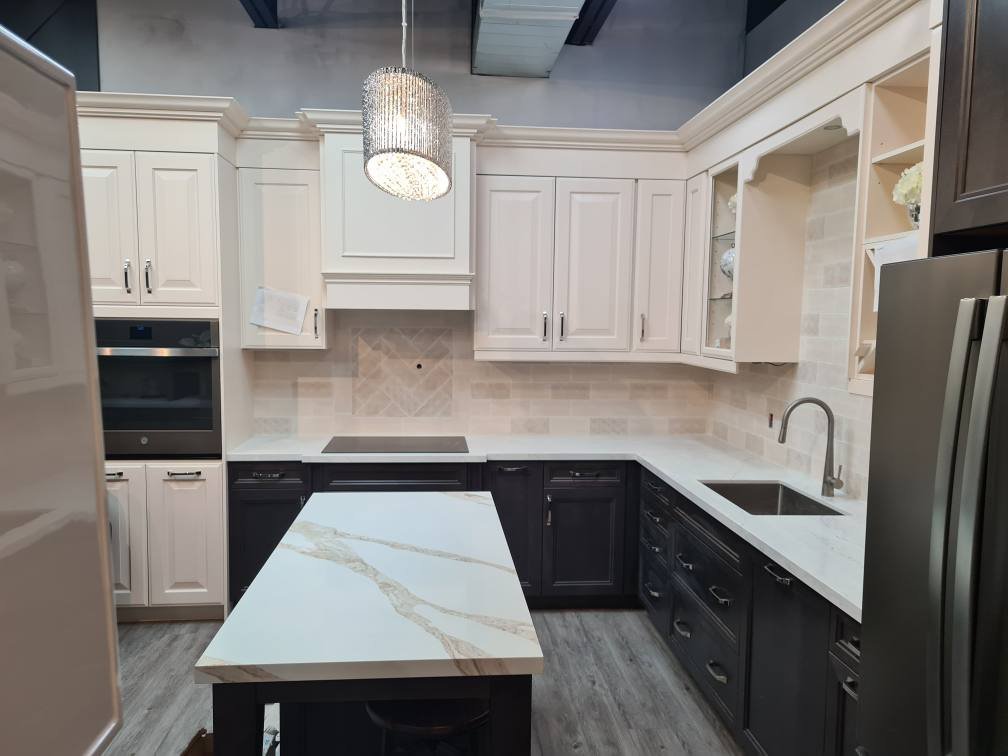
The best kitchen backsplash tile for most Toronto homes is glazed porcelain or ceramic in a 3×12 or 4×12 subway format, laid in a running-bond or stacked pattern. It resists splashes, wipes clean in seconds and suits almost any budget. Glass, natural stone and handmade zellige also work well, but they need more planning for cleaning, sealing and installation.
What Is a Kitchen Backsplash Tile?
Kitchen backsplash tile is a water-resistant wall finish installed between the countertop and the upper cabinets to protect drywall from moisture, grease and heat.
Backsplash layout is the plan that defines where the first tile sits, how rows align with the countertop, outlets and cabinets, and where cuts fall.
Grout is the cement-based or epoxy filler that seals the joints between tiles and defines the final look of the pattern.
Because the backsplash sits at eye level, the material, pattern and layout together shape the whole kitchen.
How to Choose the Right Backsplash Tile Material
Start with how you cook and clean. A busy family kitchen needs a different surface than a condo kitchen used mostly for coffee and light meals.
| Material | Durability | Maintenance | Look | Budget |
|---|---|---|---|---|
| Porcelain | Very high | Wipe clean, no sealing | Stone, marble or concrete looks | Medium |
| Ceramic | High | Wipe clean, no sealing | Classic gloss or matte colours | Low to medium |
| Glass | High | Very easy, shows streaks | Reflective, modern | Medium to high |
| Natural stone (marble, travertine) | Medium | Needs regular sealing | Unique veining, premium | High |
| Zellige (handmade) | Medium | Moderate | Irregular, artisan | High |
| Large-format porcelain slab | Very high | Minimal grout lines | Seamless, contemporary | High |
Porcelain and ceramic
Porcelain tile is a dense, low-absorption tile fired at high temperature, which makes it very resistant to stains and moisture. Ceramic tile is a slightly softer, more affordable clay tile that suits walls perfectly. Both are the safest choice for a first renovation.
Glass tile
Glass tile bounces light around the room, which helps in darker Toronto kitchens, especially in older homes with small windows. It needs a clean, flat wall and a skilled installer, because any unevenness shows in the reflection.
Natural stone
Marble and travertine bring a high-end look, but they are porous. They need sealing and can etch if lemon juice, vinegar or tomato sauce is left on the surface.
Installers at Dream House Tile point out that the easiest formats to install are 12×24 and 24×24 porcelain in a stacked pattern, while smaller tiles need more cutting and a perfectly levelled wall.
Backsplash Tile Patterns and Sizes
The pattern controls how busy the wall feels and how much the installation costs. These are the most popular options:
- Running bond (brick offset) is a pattern where each row is shifted by half a tile. It is the classic subway look and hides small wall imperfections.
- Stacked (straight lay) is a pattern where tiles line up in clean vertical and horizontal joints. It feels modern and works best with rectified tiles.
- Herringbone is a pattern of rectangular tiles set at 90 degrees in a zigzag. It adds movement but needs more cuts and more labour.
- Chevron is a V-shaped pattern made with angled tile ends. It looks dramatic and suits a feature wall behind the range.
- Mosaic is a sheet of small tiles, often 1×1 or hexagons. It handles curves and niches well but has many grout lines to clean.
- Vertical stack is a layout where rectangular tiles stand upright. It makes ceilings look higher in low-ceiling condos.
If you want to see real examples before deciding, browse the project gallery of completed tile installations in Toronto.
How to Plan the Backsplash Layout
A good layout is mostly about avoiding surprises. Follow these steps before the first tile goes on the wall:
- Measure the area between the countertop and the upper cabinets. The standard gap is about 18 inches.
- Subtract windows, outlets and the range hood zone to calculate the real square footage, then add 10-15% for cuts and waste.
- Choose a focal point, usually the range, and mark a vertical centre line.
- Dry-lay one row of tile on the countertop so you can see where the cuts will fall at both ends.
- Adjust the starting point so you never end up with thin slivers of tile next to a cabinet or window.
- Move outlets and switch plates forward if the new tile is thicker than the old wall finish.
Many homeowners also extend the tile to the ceiling behind the stove. This turns the wall into a statement area, and our guide to feature wall tile installation covers how that works.
Toronto Considerations: Condos, Older Homes and Winter
Many Toronto condos require booking elevators and limit working hours, so the installer should plan deliveries and cutting in advance. Older houses in neighbourhoods such as the Beaches, East York or the Junction often have walls that are out of plumb, which makes patterns with tight joints harder to set.
Dry winter air and humidity swings from cooking can also stress poorly installed grout lines. Quality thin-set and a flexible caulk joint at the countertop help prevent cracks.
How Much Does Backsplash Tile Cost in Toronto?
A backsplash is a small surface, often 25-40 square feet, so the tile you choose drives most of the budget. For reference, Dream House Tile lists basic floor tile labour at roughly $8-$12 per sq. ft., while intricate patterns, large-format slabs and wet areas can range from $15-$25+ per sq. ft.
Four factors usually change the price: how much preparation the wall needs, the tile size and pattern, the total job size and the complexity of cuts around windows and outlets. Most backsplashes are finished in one day.
Professional Installation vs DIY
DIY is realistic for a flat wall and large ceramic tile. It becomes risky with glass, stone, herringbone or uneven walls, where mistakes show immediately. Professional work also gives you a workmanship warranty. For a full overview of what is included, see our kitchen backsplash tile installation service in Toronto.
If you are considering a seamless look with very few joints, read about large format porcelain tiles and slabs installation, which handles slabs up to 10 feet.
Ready to price your project? Contact Dream House Tile for a free in-home estimate within 48 hours.
Frequently Asked Questions
What is the best tile for a kitchen backsplash?
Glazed porcelain or ceramic subway tile is the best all-round choice because it is durable, easy to clean and affordable. Glass and natural stone are good alternatives for a more premium look.
How high should a kitchen backsplash be?
A standard backsplash runs from the countertop to the bottom of the upper cabinets, typically about 18 inches. Many homeowners also tile up to the ceiling behind the range for a bold look.
How long does it take to install a kitchen backsplash?
Most standard kitchen backsplashes are installed in about one day, plus time for grout to cure. Complex patterns or demolition of old tile can add extra time.
Which backsplash pattern is easiest to keep clean?
Large tiles with thin grout lines are the easiest to wipe down because there are fewer joints to collect grease. Epoxy grout makes small mosaics easier to maintain too.
Can I install new backsplash tile over old tile?
Sometimes, if the old tile is firmly bonded, flat and clean, but removing it usually gives a flatter and more reliable result. A tile installer can check the wall before you decide.
How much does backsplash tile installation cost in Toronto?
Labour depends on tile size, pattern and wall condition, and complex layouts cost more per square foot than simple ones. The most accurate way to get a price is a free in-home estimate.