

Choosing Tiles for Bathroom Renovation: A Comprehensive Guide to Materials and Styles
Embarking on a bathroom renovation is an exciting yet complex journey. Unlike any other room in the house, the bathroom presents a unique set of challenges and opportunities. It is a space defined by water, fluctuating temperatures, and high humidity, which means that the materials you choose must be as technically resilient as they are visually appealing. At the very foundation of this delicate balance between form and function lies your choice of tile.
Tiles serve as the protective skin of your bathroom, shielding the underlying structure from moisture damage while simultaneously acting as the primary aesthetic driver of the space. Whether you are aiming for a serene, spa-like retreat, a sleek and modern wet room, or a vibrant, bohemian sanctuary, the tiles you select will dictate the tone. However, stepping into a tile showroom can be an overwhelming experience. With thousands of options ranging in material, shape, size, color, and texture, making the right decision requires a solid understanding of what is available.
This comprehensive guide will navigate you through the intricate world of bathroom tiles, exploring the structural differences between various materials, breaking down the latest design styles, and offering practical advice to ensure your renovation stands the test of time.
The Core Materials – Form Follows Function
Before falling in love with a specific color or pattern, it is crucial to understand what the tile is made of. The composition of a tile dictates its water resistance, durability, maintenance requirements, and overall lifespan in a wet environment.
1. Ceramic Tiles
Ceramic tiles are the traditional workhorse of the bathroom. They are made from natural clay that is shaped, glazed, and fired in a kiln. Because they are baked at relatively lower temperatures compared to porcelain, ceramic is slightly softer and more porous.
- Pros: Ceramic is generally more affordable than porcelain or natural stone. It is lightweight, making it easier to cut and install, which is particularly beneficial for DIY enthusiasts. The glazed surface comes in an infinite array of colors and patterns and is completely impervious to water.
- Cons: While the glaze is waterproof, the underlying clay is not. If a ceramic tile chips, the differently colored clay body underneath will be visible. Furthermore, because it is more prone to absorbing water than porcelain, standard ceramic is best reserved for bathroom walls, backsplashes, and light-traffic floors, rather than high-traffic floors or shower pans.
2. Porcelain Tiles
Porcelain is a specific, highly refined subset of ceramic. It is manufactured using denser clays, including kaolin, and is fired at significantly higher temperatures for a longer period. This rigorous manufacturing process results in a tile that is incredibly dense, hard, and practically impervious to water (boasting a water absorption rate of 0.5% or less).
- Pros: Porcelain is the ultimate material for bathroom environments. Its exceptional durability means it can easily withstand heavy foot traffic, dropped items, and constant moisture. It is ideal for shower floors, walls, and main bathroom floors. Through-body porcelain carries its color all the way through the tile, meaning minor chips remain almost invisible.
- Cons: The extreme hardness of porcelain makes it difficult to cut without specialized tools like a wet saw with a diamond blade. It is also heavier and generally more expensive than standard ceramic.
3. Natural Stone Tiles
For those seeking unparalleled, organic beauty, natural stone is the pinnacle of luxury. No two stone tiles are exactly alike, featuring unique veining, color variations, and mineral deposits formed over millions of years. Common bathroom stones include:
- Marble: Offers a classic, opulent look with its dramatic veining. It is, however, quite porous and susceptible to scratching and staining from acidic substances (like certain cleaners or cosmetics).
- Slate: Known for its rich, dark tones and highly textured surface, slate provides excellent natural slip resistance, making it wonderful for bathroom floors.
- Travertine: Characterized by its warm, earthy tones and pitted surface, travertine brings a rustic, old-world charm to a space.
- Pros: Stone adds significant real estate value and timeless elegance to a home.
- Cons: Natural stone requires strict, ongoing maintenance. It must be professionally sealed upon installation and resealed regularly to prevent water absorption, staining, and bacterial growth.
4. Glass Tiles
Glass tiles are predominantly used as accent pieces, mosaics, or backsplashes. They are formed by casting glass into small shapes, often with a translucent or highly reflective finish.
- Pros: Glass beautifully reflects light, making small bathrooms feel larger and more luminous. It is naturally impervious to water and highly resistant to stains.
- Cons: Glass can be slippery when wet, meaning it is rarely used for flooring unless it is cast into very small mosaic pieces with plenty of grout lines for traction. It also easily shows hard water spots, soap scum, and fingerprints, requiring frequent wiping down.
5. Cement (Encaustic) Tiles
Cement tiles have experienced a massive resurgence in recent years, beloved for their vibrant, pigmented, and often highly intricate geometric or floral patterns.
- Pros: They offer a bespoke, artisanal aesthetic that immediately becomes the focal point of any room. They are incredibly thick and durable.
- Cons: Cement is highly porous. In a bathroom setting, it requires multiple coats of high-quality penetrating sealer before and after grouting to prevent water damage and staining. They are also heavy, requiring a strong subfloor.
Quick Reference Material Comparison Table
To help you synthesize the characteristics of these materials, consult the comparative table below:
| Material | Durability | Water Resistance | Maintenance Level | Relative Cost | Best Application in Bathroom |
| Ceramic | Moderate | High (Glaze only) | Low | Low to Medium | Walls, Vanity Backsplashes |
| Porcelain | Very High | Very High (<0.5% absorption) | Low | Medium to High | All Floors, Shower Walls & Pans |
| Marble | Moderate | Low (Requires Sealing) | High | Very High | Feature Walls, Low-Traffic Floors |
| Slate | High | Moderate (Requires Sealing) | Medium | High | Main Floors, Wet Room Floors |
| Glass | Low (Brittle) | Ultimate | Medium (Shows spots) | Medium to High | Accents, Niche Inserts, Walls |
| Cement | High | Low (Requires Sealing) | High | High | Statement Floors, Accent Walls |
Exploring Tile Styles, Shapes, and Trends
Once you have determined the appropriate materials for your project, the creative phase begins. The style of tile you choose will define the architectural era and mood of the space. Here are the leading styles dominating contemporary bathroom design:
1. The Timeless Subway Tile
Originally introduced in the New York City subway system in the early 1900s, the standard 3×6 inch glossy white rectangular tile has become a design staple. Its enduring appeal lies in its clean lines and versatility. Today, the subway tile has evolved. Designers are stepping away from the traditional horizontal “running bond” brick pattern and experimenting with vertical stacks (which draw the eye upward, making ceilings appear higher), herringbone patterns, and basketweaves. Furthermore, subway tiles now come in elongated formats, textured surfaces, and rich, moody colors like forest green, navy blue, and terracotta.
2. Large Format Tiles
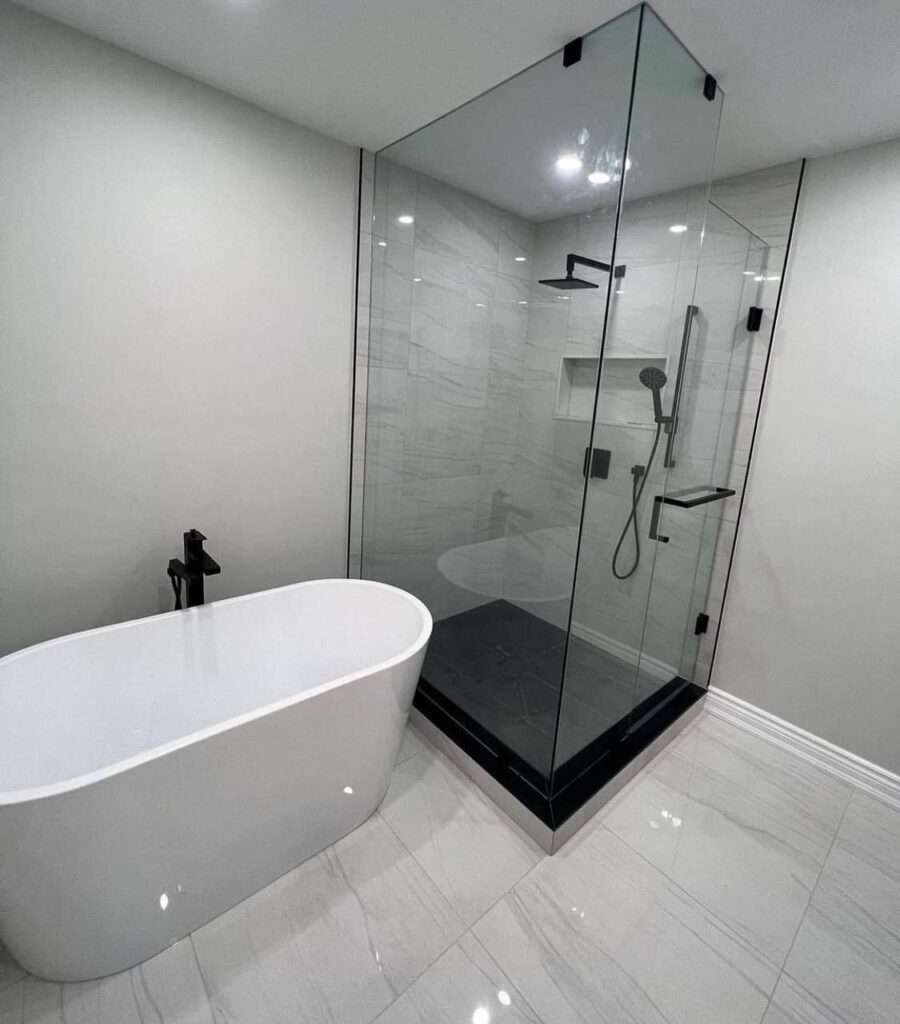
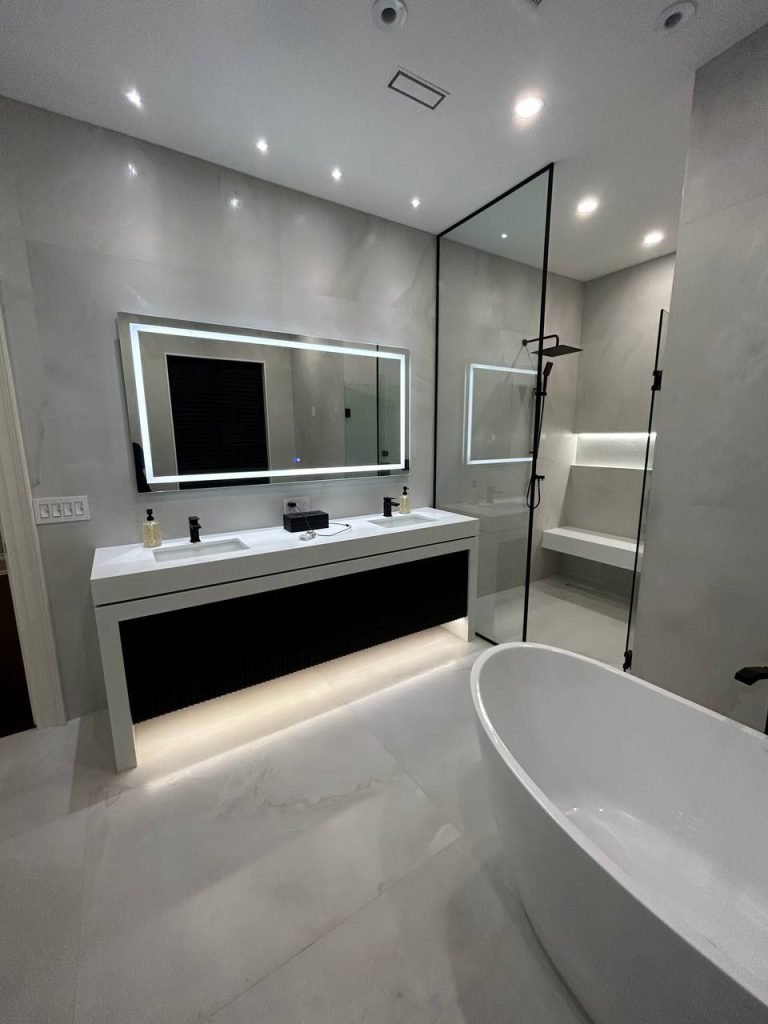
There is a distinct shift toward large format tiles (typically defined as tiles with at least one edge greater than 15 inches, scaling up to massive slabs of 24×48 inches or more). The primary benefit of large format tiles is the dramatic reduction in grout lines. Fewer grout lines create a seamless, monolithic look that visually expands the room, making it feel expansive and uncluttered. Additionally, less grout means significantly less scrubbing to prevent mildew.
3. Wood-Look Porcelain
Many homeowners crave the warmth, texture, and organic feel of hardwood floors but recognize that putting actual wood in a high-humidity bathroom is a recipe for warping and water damage. Advancements in high-definition inkjet printing technology on ceramics have created wood-look porcelain planks that are nearly indistinguishable from natural timber. You get the cozy aesthetic of oak, walnut, or weathered driftwood, combined with the waterproof durability of porcelain.
4. Geometric and Encaustic Patterns
For those looking to make a bold architectural statement, geometric tiles are the answer. Hexagons, octagons, chevrons, and arabesque shapes break away from linear grid designs, adding dynamic movement to the space. Hexagon mosaics, in particular, are incredibly popular for shower floors. Coupled with patterned encaustic tiles (often featuring intricate Moroccan or Spanish motifs), these tiles are best used to ground the space on the floor or to create a striking feature wall behind a freestanding bathtub.
5. Terrazzo
Terrazzo, a composite material originating in Italy, consists of chips of marble, quartz, granite, or glass set into concrete or epoxy. It is enjoying a massive renaissance. Modern terrazzo tiles offer a playful, speckled aesthetic that bridges the gap between retro mid-century modern and contemporary chic. It comes in a variety of color palettes, from subtle monochromatic grays to vibrant mixtures featuring pink, green, and blue aggregates.
6. Tactile and 3D Tiles
Bathrooms are increasingly becoming sensory spaces. Tiles with raised, three-dimensional textures—such as fluted, ribbed, or sculpted wave patterns—add incredible depth to the walls. When combined with strategic directional lighting, 3D tiles create striking shadow play, transforming a flat wall into a sculptural piece of art.
Practical Considerations for a Flawless Finish
Choosing a beautiful tile is only half the battle; ensuring it performs safely and beautifully over time requires attention to technical details.
Slip Resistance is Paramount
The bathroom is a slip-and-fall hazard zone. When selecting floor tiles, pay close attention to the Dynamic Coefficient of Friction (DCOF) rating. A DCOF of 0.42 or higher is generally recommended for indoor spaces that will be walked on when wet. Glossy tiles are notoriously slippery and should be strictly reserved for walls. For floors, opt for matte, honed, or textured finishes. A clever trick for shower floors is to use smaller mosaic tiles (like 2×2 inch squares or small hexagons); the sheer volume of grout lines required to install them provides excellent natural traction for bare feet.
The Importance of Grout
Grout is often treated as an afterthought, but it plays a critical role in both the structural integrity and the aesthetics of your tilework.
- Type: Traditional cementitious grout is porous and prone to staining, meaning it requires regular sealing. For wet areas, consider upgrading to epoxy grout. While more difficult to install and more expensive, epoxy grout is completely waterproof, highly stain-resistant, and never needs to be sealed.
- Color: The color of your grout drastically alters the look of your tile. Matching the grout color to the tile creates a subtle, seamless look. Choosing a contrasting grout (like dark charcoal grout with white subway tiles) highlights the geometric shape of the tile and adds an industrial, graphic edge.
Rectified vs. Non-Rectified Edges
If you desire ultra-thin, sleek grout lines, you must purchase “rectified” tiles. Traditional tiles shrink slightly and unevenly during the firing process, resulting in slight variations in size that require thicker grout joints to hide the discrepancies. Rectified tiles are mechanically cut or ground down after firing to ensure exact, precise dimensions, allowing for incredibly narrow, modern grout lines (as thin as 1/16th of an inch).
Masterful Mixing and Matching
A professionally designed bathroom rarely relies on a single tile from ceiling to floor. However, mixing different tiles can quickly look chaotic if not done with a guiding strategy.
- The Rule of Three: A safe and highly effective design formula is to limit yourself to three distinct tiles: one for the main floor, one for the shower or main walls, and a smaller accent tile for niches or a feature wall.
- Balance Scale: Do not mix tiles of the exact same size unless they are laid in the exact same pattern. Pair a large-format floor tile with a small mosaic wall tile. This contrast in scale creates visual harmony rather than visual competition.
- Balance Pattern with Soloids: If you choose a highly decorative, vibrant patterned encaustic tile for the floor, balance it with simple, solid-colored tiles on the walls. Allow the “hero” tile to take center stage while the others play a supporting, complementary role.
Conclusion
Choosing the right tiles for your bathroom renovation is a critical investment in your home’s functionality, value, and aesthetic appeal. By taking the time to understand the structural properties of materials like porcelain, ceramic, and natural stone, and carefully considering practical elements such as slip resistance and grout quality, you lay the groundwork for a successful remodel. From there, the vast array of styles—be it the classic elegance of a subway tile, the seamless grandeur of large format slabs, or the artisanal charm of patterned cement—allows you to inject your personal style into the space. Plan carefully, prioritize quality, and your renovated bathroom will serve as a beautiful, durable sanctuary for decades to come.