
A bathroom renovation is one of the most significant and rewarding investments you can make in a property. However, the world of interior design is notoriously cyclical. What looks incredibly chic and modern today can easily feel dated, tired, and in desperate need of an update in just five to ten years. For homeowners and real estate investors looking to maximize their return on investment (ROI) and enjoy a beautiful space for decades, the secret lies in choosing timeless design elements.
Creating a bathroom that never goes out of fashion does not mean sacrificing personality or settling for a boring aesthetic. Instead, it involves building a foundation on classic materials, elegant proportions, and neutral palettes that can seamlessly adapt to changing micro-trends through easily swappable accessories. Below, we explore the definitive, timeless bathroom renovation styles that will look just as stunning twenty years from now as they do today.
The Foundation of Timelessness: Neutral Color Palettes
The most critical decision in any bathroom remodel is the overarching color palette. While bold, highly saturated colors—such as emerald green, navy blue, or terracotta—can make a stunning impact, they are intimately tied to specific design eras. To ensure longevity, your foundational colors should be rooted in nature and neutrality.
- Crisp Whites: White is the ultimate timeless color for a bathroom. It evokes an immediate sense of cleanliness, purity, and expansiveness. A white palette maximizes natural light, making even the smallest bathrooms feel open and airy.
- Warm Creams and Taupes: For those who find stark white too clinical, warm off-whites, creams, and gentle taupes offer a softer alternative. These shades provide warmth and depth while remaining entirely unobtrusive.
- Soft Grays: A masterclass in modern classicism, soft gray bridges the gap between traditional and contemporary design. It pairs beautifully with almost any metallic finish and provides a sophisticated backdrop for both natural stone and pristine white porcelain.
Pro Tip: Keep the permanent fixtures (tubs, toilets, sinks, and wall tiles) neutral. You can always introduce trendy colors through easily replaceable items like towels, bath mats, shower curtains, and wall art.
Classic Wall Treatments: The Reign of Subway Tile
If there is one design element that has decisively proven its staying power, it is the classic subway tile. First introduced in the subterranean stations of the New York City subway system in 1904, these simple, rectangular ceramic tiles were chosen for their durability, low maintenance, and highly reflective surfaces.
Over a century later, a standard 3×6-inch white ceramic subway tile remains the gold standard for bathroom walls and showers. Its simple geometry allows it to blend seamlessly with virtually any architectural style, from a historic Victorian home to a sleek, contemporary urban loft.
To give subway tile a subtle modern twist without sacrificing its timeless appeal, consider slight variations in installation or material:
- Alternative Patterns: While the traditional running bond (brick) pattern is the most classic, laying subway tiles in a herringbone or vertical stacked pattern can add architectural interest.
- Contrasting Grout: Using a light gray or charcoal grout against white tile highlights the geometric pattern and has the added benefit of hiding moisture stains better than pure white grout.
- Material Upgrades: Swapping standard ceramic for marble subway tile elevates the luxury of the space while maintaining the classic shape.
Luxurious Flooring and Countertops: Natural Stone
When it comes to lasting appeal, synthetic materials rarely stand the test of time. Natural stone has been used in bathing spaces since the days of ancient Roman bathhouses, and its association with luxury, durability, and elegance remains unbroken.
Carrara and Calacatta Marble
Marble is synonymous with high-end bathroom design. Carrara marble, with its soft, feathery gray veining against a white background, offers a subtle and historic look. Calacatta marble provides a bolder statement with thicker, more dramatic veining. While marble requires sealing and a bit more maintenance to prevent etching, its patina over time is considered part of its organic charm.
Travertine and Limestone
For a warmer, more rustic, or Mediterranean-inspired timelessness, travertine and limestone are exceptional choices. Their earthy tones and matte finishes create a spa-like, grounding atmosphere that eschews flashy trends in favor of natural tranquility.
Hexagon and Basketweave Floor Mosaics
For bathroom floors, especially in smaller spaces or shower pans, classic mosaic patterns are perpetually stylish. A black-and-white porcelain hexagon tile or a marble basketweave pattern provides necessary slip resistance due to the high number of grout lines, while firmly anchoring the room in classic early-20th-century design.
The Centerpiece: Freestanding Bathtubs
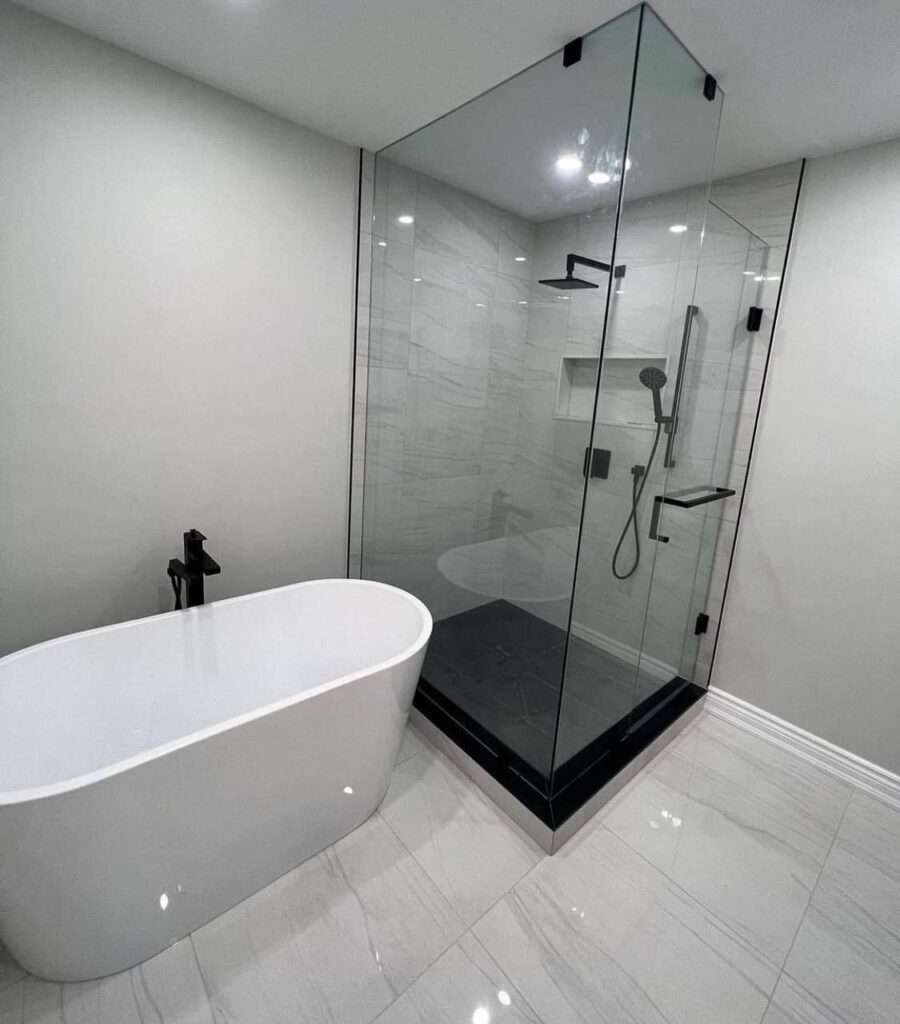
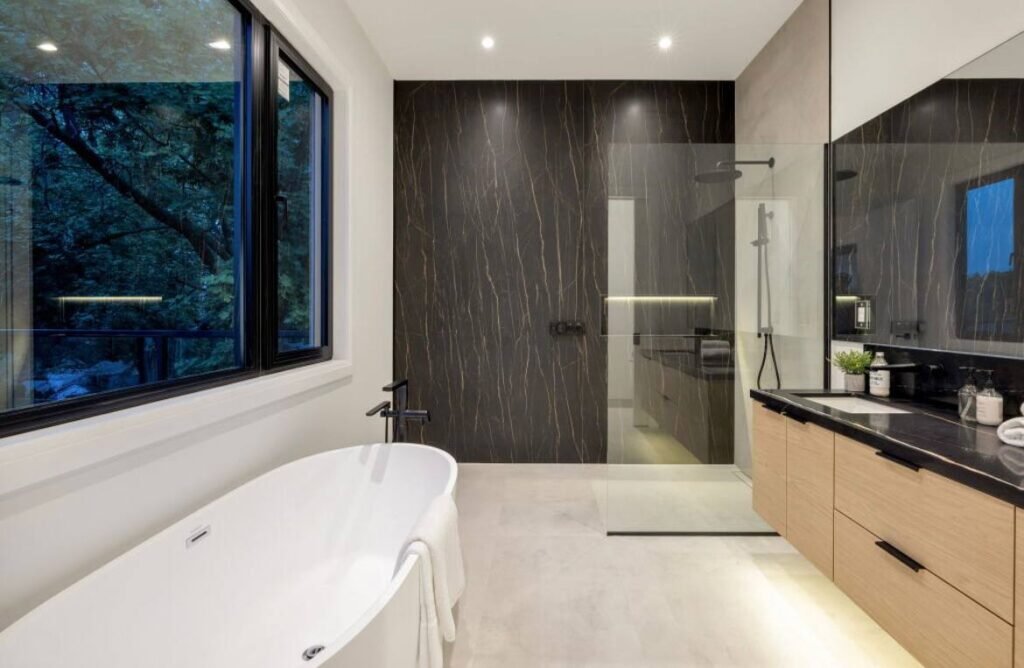
Nothing elevates the status of a primary bathroom quite like a freestanding bathtub. Unlike built-in alcove tubs, a freestanding tub acts as a sculptural focal point, breathing architectural life into the room.
- The Clawfoot Tub: The quintessential vintage piece, a cast-iron clawfoot tub is an investment in absolute classicism. It works perfectly in traditional, farmhouse, and transitional spaces.
- The Pedestal or Soaking Tub: For a more streamlined look that still captures the freestanding magic, oval or softly contoured pedestal tubs offer deep soaking capabilities with a cleaner silhouette that bridges the gap between old-world charm and modern minimalism.
Cabinetry and Storage: Shaker-Style Vanities
Vanities are often the largest pieces of “furniture” in a bathroom, making their design crucial to the room’s overall longevity. Highly ornate, heavily carved cabinets can quickly date a space, as can ultra-glossy, handle-less modern slabs.
The ultimate middle ground is the Shaker-style cabinet. Characterized by a simple, five-piece door with a recessed center panel, Shaker cabinetry is renowned for its unpretentious craftsmanship and clean lines. Whether painted in a crisp white, a moody charcoal, or finished in a natural warm wood tone like white oak or walnut, a Shaker vanity adapts to any surrounding decor. It is a chameleon of interior design, capable of leaning traditional with ornate hardware, or modern with sleek, minimalist pulls.
Hardware and Fixtures: Lasting Metallic Finishes
The plumbing fixtures, lighting hardware, and cabinet pulls are often referred to as the “jewelry” of the bathroom. While matte black and rose gold have seen massive surges in popularity recently, their staying power is questionable. For a truly timeless renovation, look to classic metallic finishes:
- Polished Nickel: Warmer than chrome, polished nickel has a deep, luxurious luster that feels historically rooted but infinitely elegant.
- Brushed Brass: Unlacquered or brushed brass offers a warm, golden tone that is far more subdued and sophisticated than the bright, shiny brass of the 1980s. Unlacquered brass will even develop a beautiful, unique patina over time.
- Polished Chrome: The most durable, ubiquitous, and affordable of the classic finishes. Chrome’s cool, reflective surface has been a bathroom staple for decades and will never look out of place.
Illuminating the Space: Layered and Classic Lighting
A timeless bathroom requires lighting that is both functional and flattering. The most enduring lighting schemes rely on a layered approach. Instead of relying solely on a harsh overhead recessed light, incorporate wall sconces at eye level.
Mounting sconces on either side of the vanity mirror is a classic design choice that eliminates the harsh downward shadows caused by overhead lighting, providing an even, flattering glow for daily grooming. Classic shapes, such as simple glass globes, conical shades, or elegant candle-style fixtures in the classic metallic finishes mentioned above, ensure the lighting scheme remains perpetually in vogue.
Comparison: Timeless vs. Trendy Bathroom Elements
To ensure your renovation investments are protected, it is helpful to categorize design choices. Below is a quick reference guide contrasting enduring classics against fleeting trends.
| Design Element | The Timeless Choice | The Fleeting Trend |
| Color Palette | Whites, creams, soft grays, taupe | Neon accents, millennial pink, heavy black |
| Wall Tile | White ceramic subway tile, natural stone | Brightly colored glass mosaics, heavy 3D textures |
| Floor Tile | Hexagon mosaics, penny rounds, natural stone | Faux-wood ceramic planks, overly busy encaustic tiles |
| Vanity Style | Shaker-style, natural wood, simple lines | Floating high-gloss lacquer, overly ornate carving |
| Fixtures | Polished nickel, chrome, brushed brass | Matte black, rose gold, bright 80s brass |
| Bathtub | Freestanding pedestal or classic clawfoot | Oversized jetted corner Jacuzzi tubs |
Conclusion
Achieving a timeless bathroom renovation is an exercise in restraint, focusing on quality materials, proven architectural layouts, and classic color palettes. By anchoring your space with neutral tones, subway tile, natural stone, Shaker cabinetry, and elegant metallic finishes, you create a beautiful, highly functional room that transcends the fast-paced cycle of interior design trends.
A timeless bathroom not only provides a serene, elegant retreat for your daily routines but also ensures that your investment retains its aesthetic and financial value for decades to come. When in doubt, look backwards to the designs that have survived the last century—they are the safest and most stylish bet for the next one.